Have you ever completed a stunning, brightly colored EPDM playground or running track, only to find that its surface gradually turns a yellowish or amber hue after just a few weeks of sun exposure? As an EPDM flooring contractor, project manager, or material buyer, your immediate thought might be: Did we use a low-quality PU binder?
Of course not. The yellowing of polyurethane (PU) binder is a well-documented chemical reaction triggered by ultraviolet (UV) radiation, and it is a natural characteristic of certain polymer structures. It does not automatically signify that the adhesive is defective or that the flooring’s structural integrity is compromised.
In this guide, we will explore the science behind PU binder yellowing, clarify when it actually affects performance, and provide practical strategies for contractors and buyers to prevent or minimize this issue in future projects.
1. Why Does PU Binder Turn Yellow?
The Chemistry Behind PU Binder Yellowing
To understand why rubber flooring adhesives turn yellow, we must look at the chemical composition of the most commonly used PU binders. The vast majority of wet-pour rubber surfaces utilize an aromatic polyurethane binder, typically formulated from MDI (Methylene Diphenyl Diisocyanate) or TDI (Toluene Diisocyanate).
The defining feature of aromatic isocyanates is the presence of a “benzene ring” in their molecular structure. While this ring gives the binder exceptional curing speed, high tensile strength, and flexibility, it is highly sensitive to ultraviolet (UV) rays from sunlight.
When exposed to UV radiation, the chemical bonds within the polyurethane chain are broken down through a process known as photo-oxidation. This reaction converts the aromatic structures into colored chromophore formations known as quinones. Quinones inherently possess an amber, brown, or yellowish tint. Because this is a fundamental molecular change driven by UV exposure, standard UV stabilizers added to an aromatic PU binder cannot entirely stop the yellowing process—they can only delay it.

Why Yellowing Is More Visible on Light-Colored EPDM

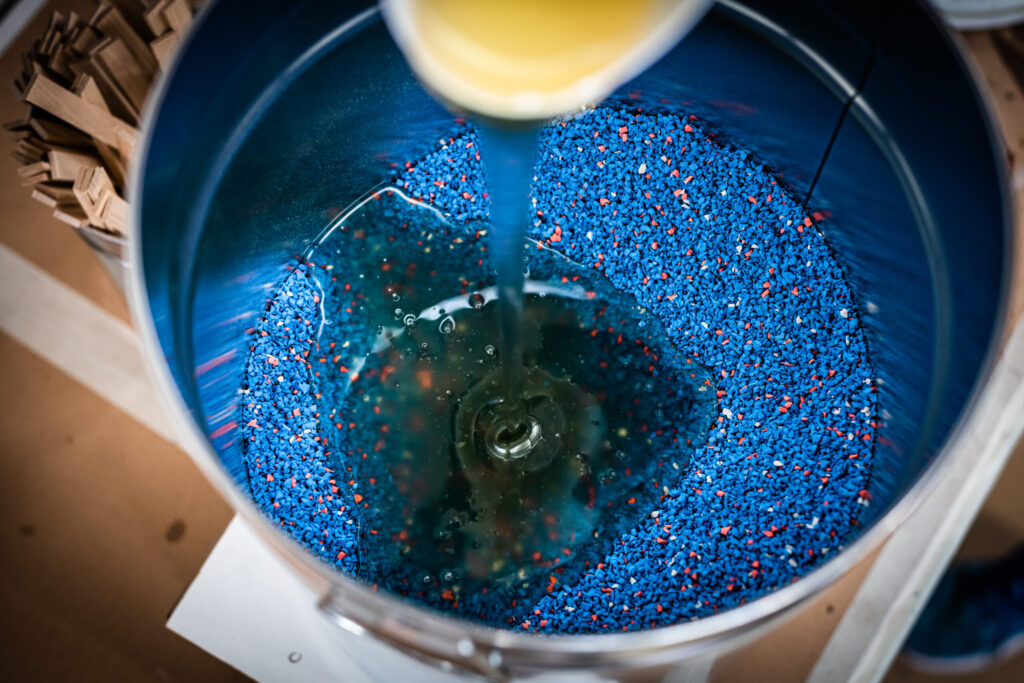
During the installation of wet-pour rubber flooring, the liquid PU binder thoroughly coats each individual EPDM granule, creating a thin, continuous adhesive film across the entire surface. When this transparent film oxidizes and turns yellow under the sun, it acts like a translucent yellow filter laid over the colored rubber granules. Learn more about how PU binder works with rubber granules in our introductory guide.
The visual impact of this yellowing is heavily dependent on the base color of the EPDM. On darker colors like black, dark green, or deep red, the amber tint of the binder is easily absorbed and virtually unnoticeable. However, on light-colored EPDM surfaces—such as white, light blue, pale grey, or pastel pink—the yellow film drastically alters the overall visual appearance of the floor, often turning pristine whites into a dull cream or giving cool blues a greenish hue.
Distinguishing PU Binder Yellowing from EPDM Granule Fading
It is crucial to distinguish between PU Binder Yellowing and EPDM Granule Fading. Yellowing is strictly the discoloration of the adhesive film coating the rubber. EPDM fading, on the other hand, occurs when the pigments inside the rubber granules themselves break down over time due to UV or chemical exposure.
How to tell them apart:
You can easily diagnose the root cause by slicing a discolored granule in half. If the granule’s inner core remains brightly colored and only the outer surface has an amber cast, it is simply binder yellowing. However, if the color appears dull, chalky, or faded completely through the cross-section, the EPDM pigment itself has failed. Understanding this distinction helps prevent wrongly blaming the adhesive for low-quality rubber.
2. Does PU Binder Yellowing Mean Poor Quality?
Yellowing Does Not Always Mean Performance Failure
The most common misconception among material buyers and end-clients is that a yellowing surface equates to a failing surface. This is fundamentally incorrect. In high-quality aromatic PU binders, yellowing is primarily a cosmetic shift, not a mechanical failure.
The formulation of an aromatic binder naturally reacts to UV light, but this surface-level photo-oxidation does not instantly destroy the polymer’s internal cross-linking. In fact, standard aromatic PU systems are favored precisely because they provide phenomenal elongation, tensile strength, and shock absorption—critical safety features for playground and sports flooring. If you observe a slight amber tint on a newly laid surface but the granules remain firmly bound together, the binder is performing exactly as intended. You cannot judge the quality, lifespan, or structural stability of a PU adhesive solely by its initial color change under the sun.
When Should Yellowing Become a Concern?
While aesthetic yellowing is normal for aromatic binders, severe physical degradation is not. You must evaluate the flooring’s physical performance alongside its appearance to determine if the material is genuinely failing.
| Phenomenon | How to Interpret It |
| Mild surface yellowing, but granules are firmly bonded with no visible damage. | This is likely purely an aesthetic change caused by UV photo-oxidation. The structural integrity and safety standards remain intact. |
| Yellowing accompanied by chalking, cracking, granule loss (raveling), or loss of elasticity. | This indicates material failure. It warrants a closer inspection of the binder quality (e.g., incorrect mix ratios, extreme environmental aging) or construction errors. |
Core Takeaway: Yellowing is not necessarily a sign of poor binder quality, but it should be evaluated alongside the flooring’s physical performance to rule out premature aging or structural breakdown.
3. How to Prevent or Minimize PU Binder Yellowing
Choose the Right PU Binder Formulation
The most fundamental way to manage yellowing is through material selection. The industry generally offers two main categories of polyurethane binders: Aromatic and Aliphatic.
- Aromatic PU Binders (e.g., MDI/TDI): As discussed, these binders contain aromatic rings and will naturally amber under UV exposure. However, they offer excellent mechanical strength, fast curing times, and high cost-effectiveness, making them the standard choice for the vast majority of global rubber flooring projects.
- Aliphatic PU Binders: These binders feature a chemically stable structure that does not break down into colored quinones, giving them exceptional UV and color stability. Because their manufacturing process is more complex, they come at a higher cost and are typically selected for light-colored outdoor surfaces where color retention is the absolute priority.
Consider UV-Resistant Surface Protection
If the budget does not allow for a full aliphatic binder system, but you still need better color stability for your surface, applying a UV-resistant topcoat is an excellent engineering compromise.
After the EPDM surface is laid using an aromatic binder and allowed to cure, a specialized aliphatic clear coating or surface protector can be sprayed or rolled over the flooring. This protective layer acts as a shield, absorbing or reflecting harmful UV rays before they can penetrate deeply into the aromatic binder below.

For instance, employing a hybrid approach like Rubflo’s MDI PU Binder combined with our Surface Protection solution offers contractors a perfect balance. It leverages the robust adhesion and affordability of MDI binders while significantly delaying the visual impact of UV rays. It is important to note that the effectiveness of surface protection depends heavily on application thickness and environmental severity—it is not a permanent replacement for a true aliphatic binder, but it is a highly effective, budget-friendly method to minimize yellowing.
Match the Binder to the Flooring Application
Effective yellowing prevention ultimately comes down to matching the right chemistry to the specific project environment.

- Light-Colored Outdoor Surfaces: For playgrounds and splash pads featuring white, pastel, or other light-colored EPDM, yellowing resistance is especially important. While aliphatic PU binders offer excellent color stability, aromatic PU binders combined with a proven UV-protective surface treatment provide a practical alternative, helping preserve surface appearance while managing project costs.
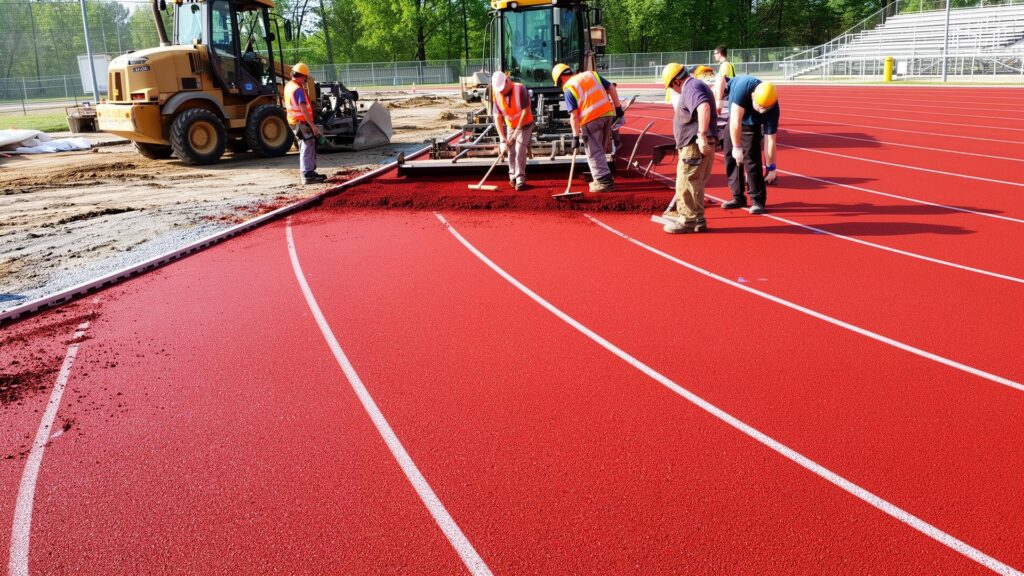
- Standard Outdoor Parks & Running Tracks: For red running tracks or playgrounds with darker surfaces, aromatic PU binders offer a cost-effective solution. Yellowing is generally less noticeable on darker colors, making aromatic binders a practical choice for projects with moderate aesthetic requirements.
- Indoor Applications: For indoor gyms and sports facilities with limited UV exposure, aromatic PU binders can be a suitable and economical option, even for lighter-colored surfaces. However, areas exposed to strong natural sunlight may still require additional yellowing protection.
Evaluate your project’s budget, color palette, and expected UV exposure to determine the most viable formulation.
4. Conclusion
When sourcing materials for EPDM rubber flooring, managing client expectations regarding color stability is a critical part of the procurement process. Remember that an aromatic binder turning yellow is a natural chemical reaction, not an automatic indicator of a failing surface.
To ensure the long-term success and aesthetic appeal of your projects, follow these best practices:
- Clarify color requirements early: Determine if the project utilizes light or dark EPDM granules and set expectations accordingly.
- Specify the correct chemistry: Choose between aromatic and aliphatic binders based on your budget, aesthetic requirements, and outdoor UV exposure.
- Ask for data: Always request Technical Data Sheets (TDS), physical samples, and UV weathering test results from your manufacturer.
- Consider hybrid solutions: For light-colored designs on a tight budget, explore tailored UV surface protectors.
If you are looking for high-quality, reliable adhesive solutions tailored to your specific application, explore Rubflo’s PU Binder products. Contact our technical team today to consult on the perfect combination of binders, surface protection, and EPDM granules for your next flooring project.