Introduction
EPDM wet-pour flooring and rubber playground tiles are two popular options for playground projects. Both can provide durable, impact-absorbing surfaces, but they differ in design flexibility, installation methods, maintenance needs, and overall costs.
Wet-pour EPDM offers a continuous surface with flexible design options, while rubber tiles provide a modular solution that can simplify repairs and replacements. However, neither option is ideal for every project. In this guide, we compare their safety performance, installation requirements, durability, maintenance, and costs. We also explain which option may better suit your specific playground needs.
What Are EPDM Wet-Pour Flooring and Rubber Playground Tiles?
Before comparing the two options, it helps to understand how each flooring system works. Although both use rubber materials to create resilient playground surfaces, they differ in their structure and installation methods.
What Is EPDM Wet-Pour Flooring?
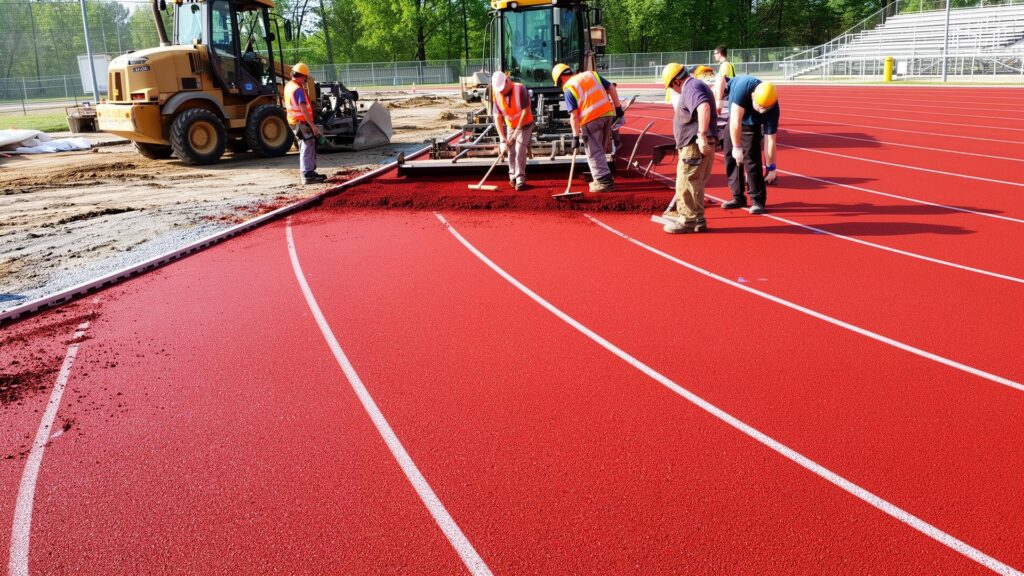
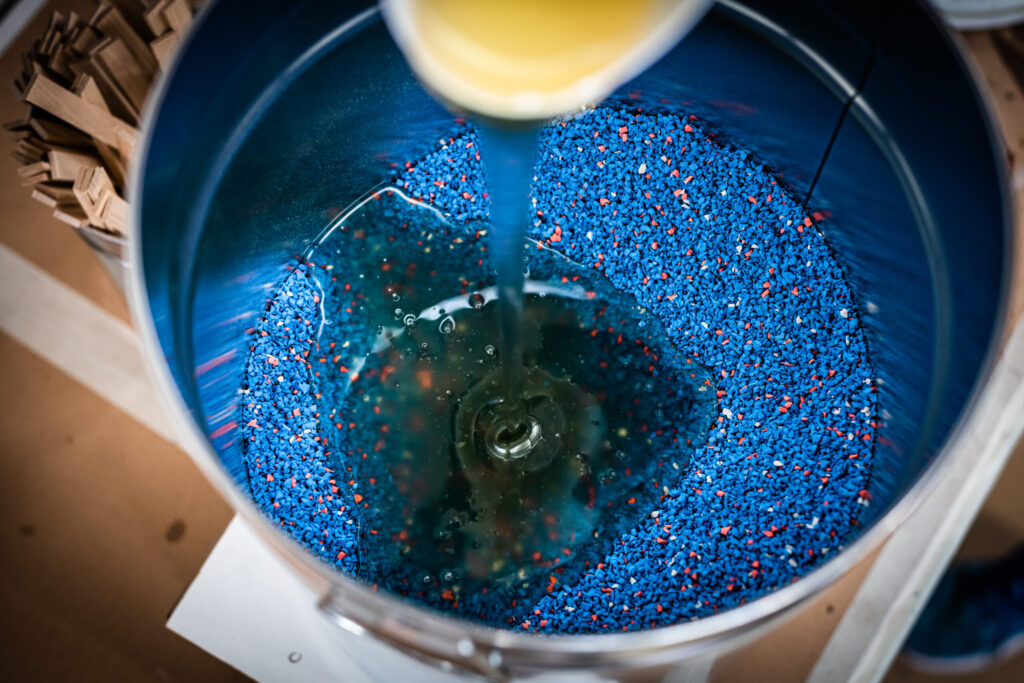
EPDM wet-pour flooring is a seamless rubber surface created by mixing EPDM granules with a compatible polyurethane (PU) binder and applying the mixture on site.
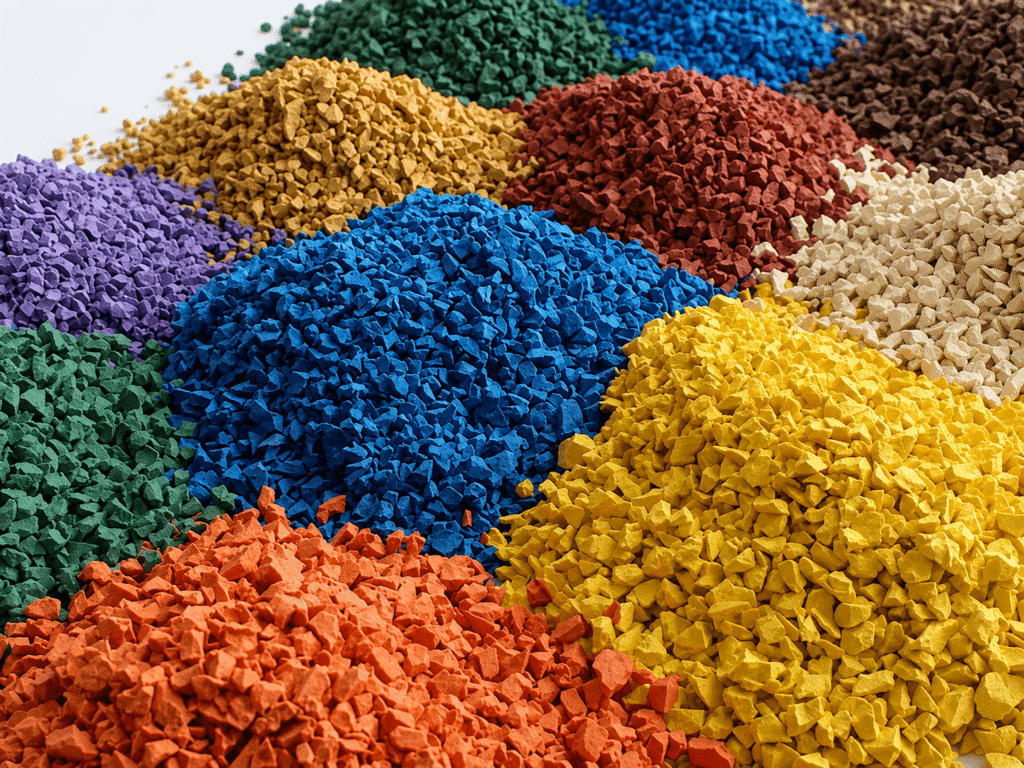
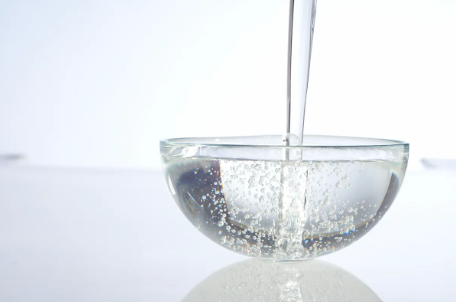
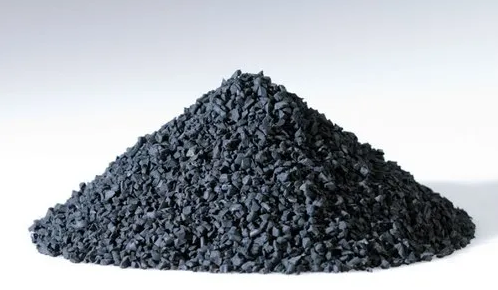
Many playground systems use two layers. The top layer contains colored EPDM granules, which provide the finished surface. Beneath it, a shock-absorbing base layer often uses SBR rubber granules and PU binder to help cushion impacts.
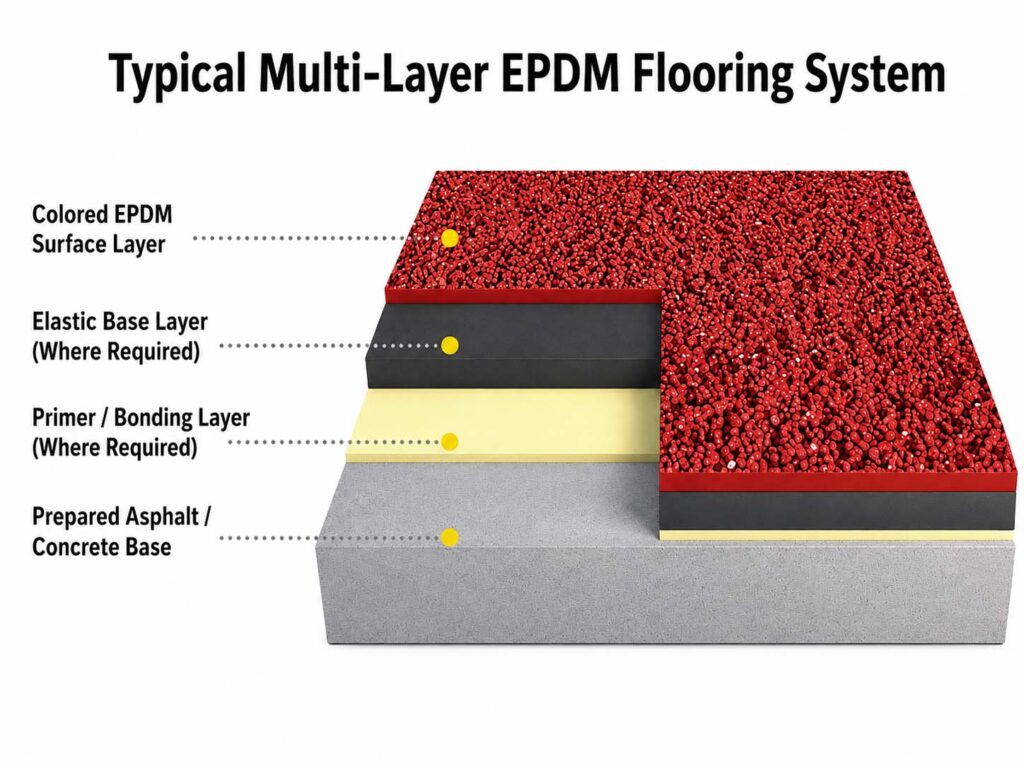
Because installers apply the material directly to the prepared surface, wet-pour EPDM can accommodate curved layouts, custom patterns, and multiple colors. As a result, it is a popular choice for playgrounds, schools, parks, and other recreational spaces. EPDM flooring systems can vary in structure and application depending on project requirements. For a broader overview, explore our guide to EPDM rubber flooring types, applications, and system structures.
What Are Rubber Playground Tiles?
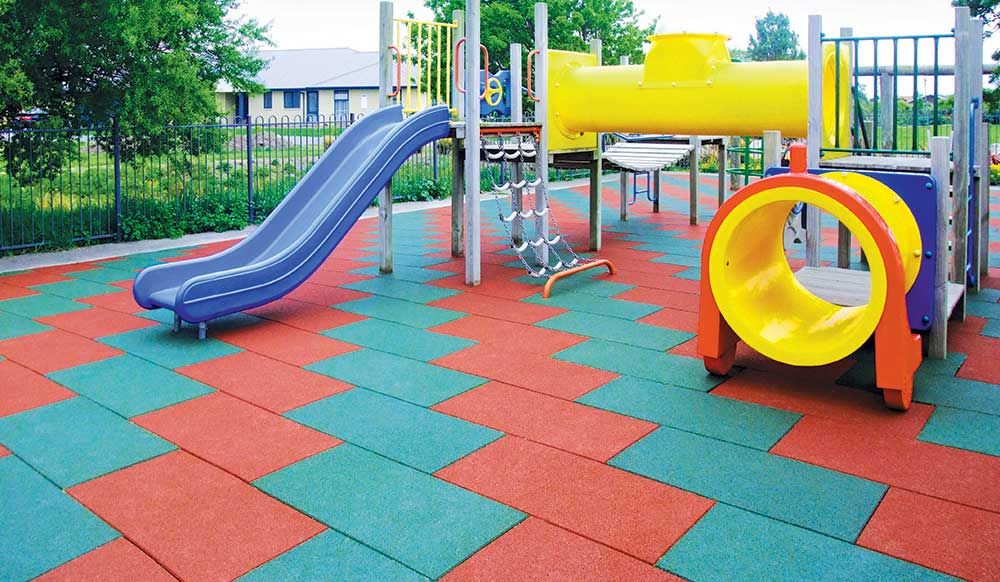
Rubber playground tiles are prefabricated flooring units manufactured before they arrive at the project site. Installers place them on a suitable base and secure them according to the product’s installation requirements.
Depending on the product, manufacturers may use SBR rubber, EPDM rubber, or a combination of materials. Tiles also come in different thicknesses, surface textures, and connection designs to suit various applications.
Unlike wet-pour flooring, rubber tiles form a modular surface with joints between individual units. This structure can make localized repairs more straightforward because installers can often replace damaged tiles without rebuilding the entire surface. However, the suitability of each tile depends on its intended application, outdoor durability, and required impact protection.
EPDM Wet-Pour Flooring vs. Rubber Tiles: Key Differences
Both EPDM wet-pour flooring and rubber playground tiles can provide resilient surfaces for playgrounds. However, they differ in construction, design flexibility, installation, and maintenance. The following table highlights the main differences to help you identify the most suitable option for your project.
| Comparison Factor | EPDM Wet-Pour Flooring | Rubber Playground Tiles |
|---|---|---|
| Surface Structure | Creates a continuous surface with minimal joints across the main area | Forms a modular surface with joints between individual tiles |
| Design Flexibility | Supports custom colors, patterns, curves, and play graphics | Offers different colors, shapes, and layouts based on tile dimensions |
| Installation | Requires on-site mixing, application, and curing | Uses prefabricated tiles installed and secured on site |
| Impact Protection | Depends on the complete system design, layer thickness, and test results | Depends on tile composition, thickness, construction, and test results |
| Maintenance and Repairs | Damaged areas can often be patched, although color matching may be difficult | Individual tiles can often be replaced without rebuilding the entire surface |
| Drainage | Depends on the system’s permeability and the prepared base | Depends on tile design, joints, and the underlying drainage system |
| Cost Factors | Influenced by material quantities, design complexity, and installation labor | Influenced by tile specifications, installation methods, and replacement needs |
As the table shows, neither option is the best choice for every playground. Wet-pour EPDM offers greater flexibility for continuous surfaces and custom designs. Meanwhile, rubber tiles provide a modular structure that can simplify certain repairs. However, the final decision should also consider safety requirements, site conditions, installation quality, and long-term maintenance.
Key Factors to Consider When Choosing Playground Flooring
Choosing between EPDM wet-pour flooring and rubber tiles requires more than comparing their appearance. Project requirements, site conditions, and long-term maintenance all affect the final decision. Therefore, it is important to evaluate the following factors before selecting a playground surfacing system.
• Playground Flooring Safety: EPDM Wet-Pour vs. Rubber Tiles

Safety is a key consideration when choosing playground flooring. Both EPDM wet-pour flooring and rubber playground tiles can help absorb the impact of falls. However, their actual performance depends on the complete flooring system and its tested specifications.
For wet-pour EPDM, the surface layer, cushioning base, and total system thickness all affect impact absorption. Rubber tiles also vary in performance depending on their material composition, thickness, and structural design.
So, how can you determine whether a flooring system provides adequate fall protection? Check its tested critical fall height and make sure it meets the requirements for the playground equipment. A thicker surface does not automatically provide better impact protection. Depending on the project location, relevant standards may include EN 1177 in Europe and ASTM F1292 in the United States. These standards help assess the impact attenuation performance of playground surfacing.
Ultimately, choose a flooring system with documented test results that meet your project’s fall-height requirements and applicable safety standards. This is more reliable than choosing between wet-pour EPDM and rubber tiles based on material type alone.
• Playground Flooring Design and Accessibility: EPDM vs. Rubber Tiles
Design requirements can also influence the choice of playground flooring, particularly for public parks, schools, and themed play areas.
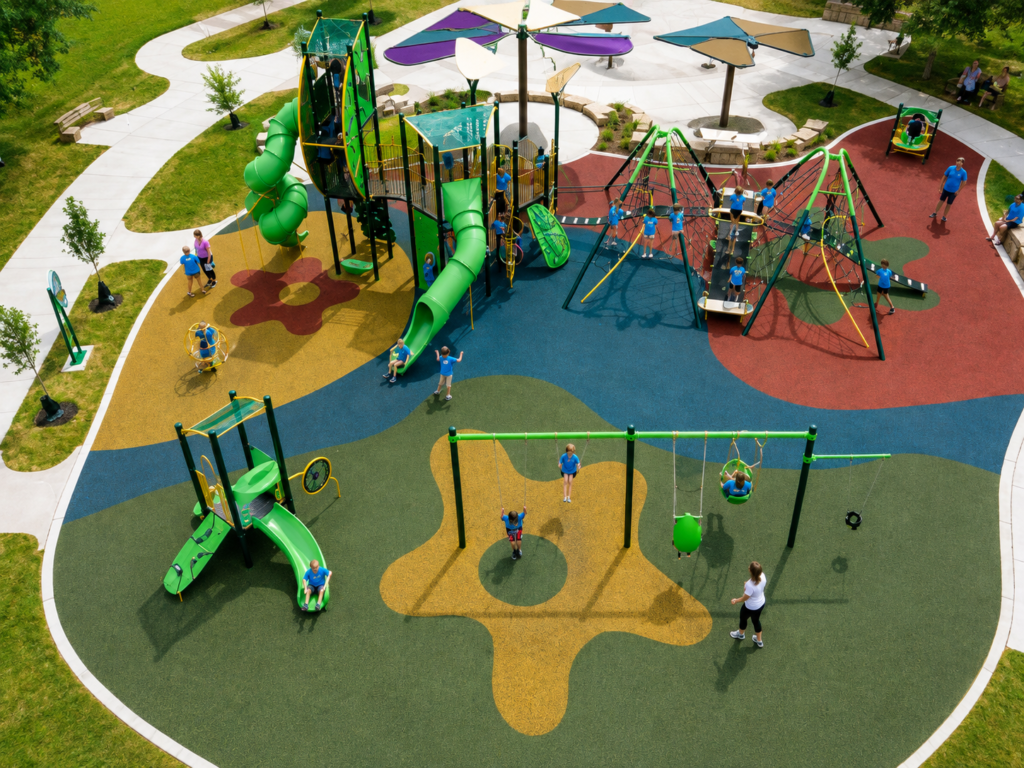
Wet-pour EPDM offers considerable design flexibility because installers apply the material directly to the prepared surface. They can create curved pathways, colorful patterns, and custom play graphics without being limited to standard tile dimensions. In addition, its continuous surface can reduce joints across play and circulation areas.

Rubber tiles offer a different approach. They come in various colors, shapes, and textures, allowing designers to create attractive layouts using modular units. However, curved boundaries and complex patterns may require additional cutting and careful alignment.
Accessibility also deserves attention. A playground surface should provide stable, firm, and suitable transitions for children and caregivers using mobility devices. Wet-pour systems can help create continuous routes, while rubber tiles require particular attention to joints, movement, and uneven edges.
Ultimately, both options can support accessible playgrounds when the selected system meets the project’s requirements and receives proper installation and maintenance.
• Playground Flooring Installation: EPDM Wet-Pour vs. Rubber Tiles
Installation methods affect project scheduling, labor requirements, and the quality of the finished surface.
Wet-pour EPDM flooring is installed directly on site. First, installers prepare the base. Then, they mix EPDM granules with PU binder, spread and level the mixture, and allow it to cure. Proper installation depends on both workmanship and site conditions. For example, rain, excess moisture, or temperatures outside the binder manufacturer’s recommended range can affect bonding and curing. Therefore, installers should check the weather and follow the product instructions before starting work.

Rubber tiles arrive as prefabricated units, so installers do not need to mix granules and binder to create the finished surface. This can simplify installation, especially in smaller or regularly shaped areas. However, the team must still prepare a suitable base, align the tiles correctly, and use the specified adhesive or connection method.

Rubber tiles may suit projects that prioritize modular installation, while wet-pour EPDM often works well for complex layouts that require a continuous surface. In either case, proper substrate preparation and installation workmanship remain essential.
• Durability, Maintenance, and Repairs
Both EPDM wet-pour flooring and rubber playground tiles need regular inspections to maintain their condition and safety performance. However, their maintenance needs differ because of their surface structure.
Wet-pour EPDM flooring can develop cracks, loose granules, or damaged areas over time. These areas can often be repaired with compatible EPDM granules and PU binder. However, the repaired surface may look different from the surrounding area, especially if the original color has faded.
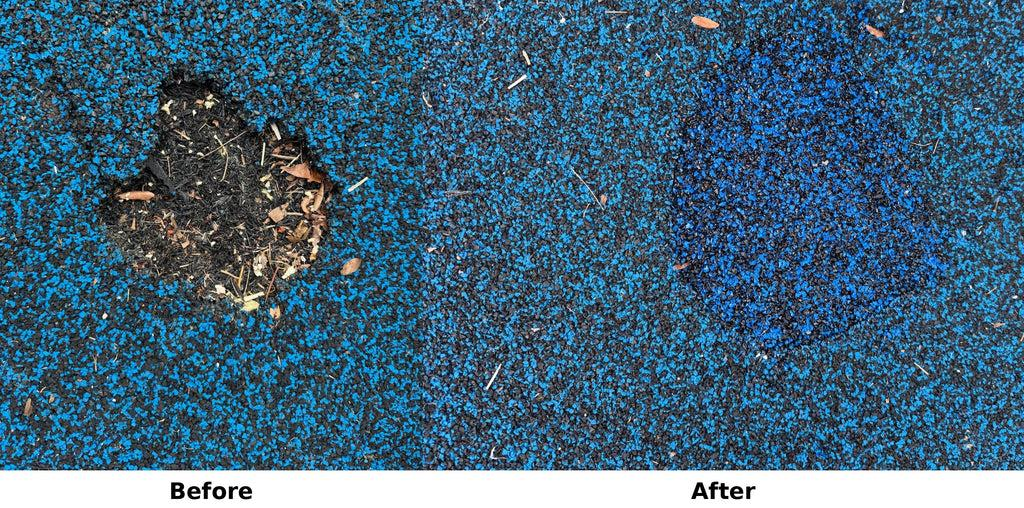
Rubber playground tiles can also crack, wear out, or become loose. However, their modular design makes some repairs easier. A damaged tile can often be replaced individually without removing the entire surface. The main considerations are whether matching replacement tiles are available and whether the underlying base remains in good condition.

Overall, wet-pour EPDM has fewer joints across the main surface, while rubber tiles can make individual replacements more straightforward. Both systems require proper installation and regular maintenance to perform well over time. Therefore, the best choice depends on the expected maintenance needs, repair options, and conditions of your playground.
EPDM granules are widely used in rubber flooring systems because they are available in a wide range of colors, allowing designers to create customized patterns, logos, and decorative surfaces. The selected granule size can influence how colors appear on the finished flooring surface.
Which Playground Flooring Is Right for Your Project?
No single playground flooring system is ideal for every project. The right choice depends on your site’s layout, design requirements, installation conditions, maintenance needs, and budget. To help you decide, the following guide highlights when EPDM wet-pour flooring or rubber playground tiles may be a better fit for your project.
When to Choose EPDM Wet-Pour Playground Flooring
- Custom Playground Designs Ideal for projects with colorful patterns, curved paths, custom graphics, or themed play areas.
- Large or Irregularly Shaped Areas Suitable for complex layouts that need a continuous surface around playground equipment.
- Continuous Accessible Routes Helps reduce surface joints along access routes when the complete design meets accessibility requirements.
- Customized Cushioning Layers Allows the surface and cushioning layers to be designed around project-specific fall-height requirements, subject to testing.
When to Choose Rubber Playground Tiles
- Small or Regularly Shaped Play Areas A practical option for compact playgrounds and simple layouts that suit standard tile dimensions.
- Playground Renovation Projects Suitable for selected refurbishment projects where prefabricated tiles can be installed on an appropriate base.
- Easier Individual Tile Replacement Damaged tiles can often be replaced separately, provided compatible replacement units are available.
- Modular Installation Works well for projects that prefer prefabricated flooring units and a defined tile layout.
Note: Both options must meet the project’s applicable impact protection and accessibility requirements. For rubber tiles, always confirm outdoor suitability and the relevant playground safety test results.
Conclusion
Both EPDM wet-pour flooring and rubber playground tiles offer practical solutions for playground surfacing. Wet-pour EPDM is worth considering for projects that require custom designs and continuous surfaces, while rubber tiles may suit projects that prioritize modular installation and easier individual tile replacement.
Before making a decision, compare the complete system specifications, tested safety performance, installation requirements, and long-term costs. Choosing the right materials for your project conditions will help you achieve a suitable balance of performance, durability, and value.
Not sure which playground flooring system is right for your project? Contact Rubflo to discuss your requirements. Our team can help you compare wet-pour EPDM and rubber tiles and identify a suitable flooring system for your application.