Introduction
EPDM rubber granules are available in different particle sizes, such as 0.5–1.5 mm, 1–3 mm, 2–4 mm, and 3–5 mm. Each size provides different surface characteristics and may be suitable for different applications.
Choosing the right EPDM granule size requires considering factors such as project type, surface requirements, installation system, and expected performance. This guide explains the differences between common EPDM granule sizes and helps you select the right option for your project.
What Does EPDM Granule Size Mean?
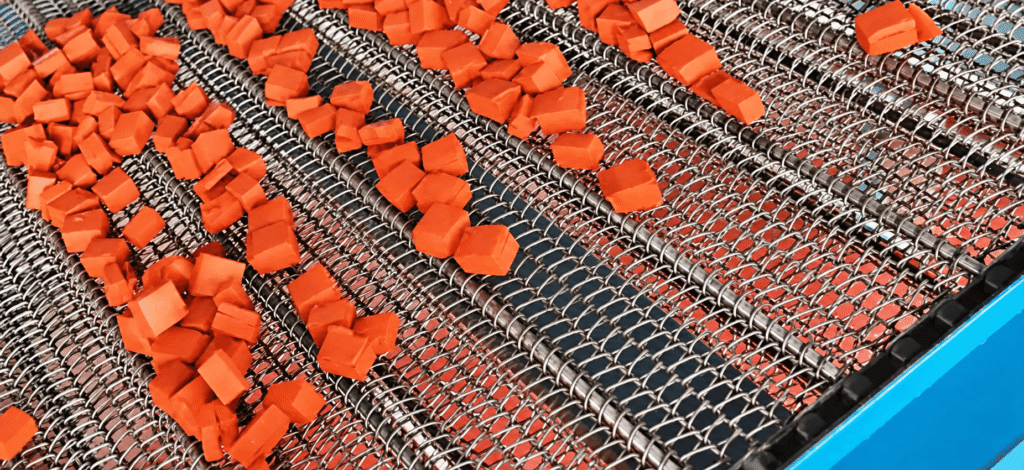
EPDM granule size refers to the size range of individual rubber particles after manufacturers process and screen the granules. Manufacturers usually measure granule size in millimeters (mm) to indicate the approximate diameter range of each particle.
During production, manufacturers process EPDM rubber into different granule sizes to meet various surface design and performance requirements. Different particle sizes create different textures, appearances, and installation characteristics for EPDM rubber flooring systems.
Understanding the differences between EPDM granule sizes helps in selecting the most suitable material for different project requirements.
EPDM Granule Size Comparison: 0.5–1.5 mm, 1–3 mm, 2–4 mm and 3–5 mm
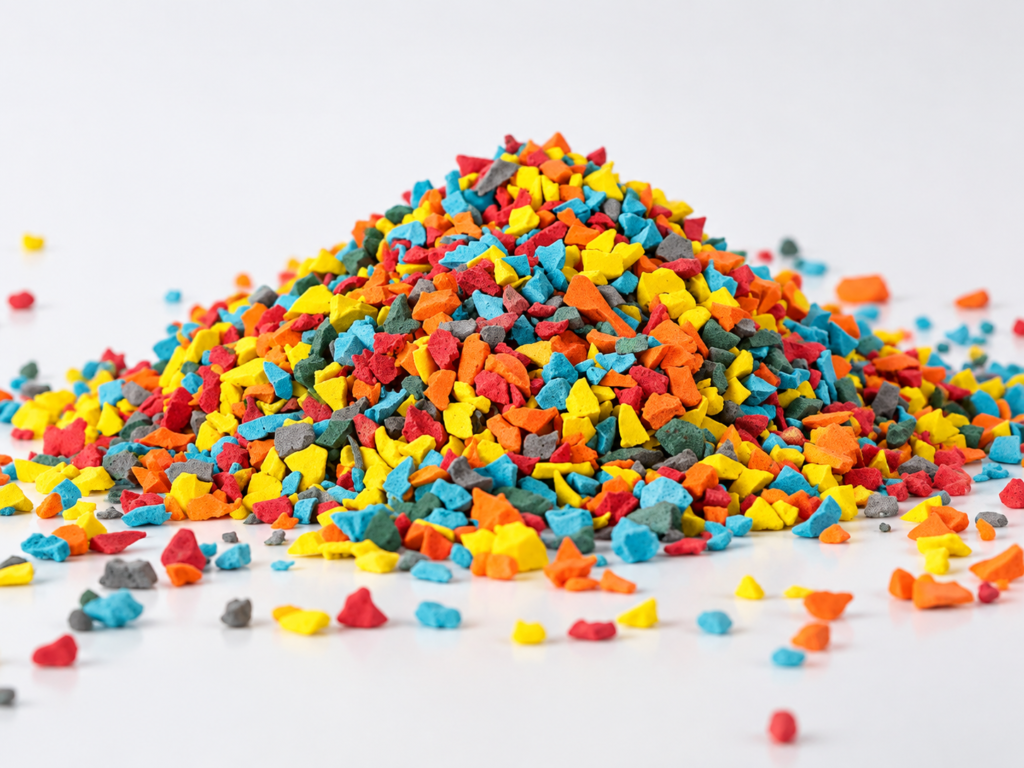
EPDM rubber granules are available in different particle sizes to meet various surface design and performance requirements. The right granule size depends on factors such as the desired surface appearance, texture, application type, and installation system.
The following table provides an overview of common EPDM granule sizes and their general characteristics.
| EPDM Granule Size | General Characteristics | Typical Considerations |
|---|---|---|
| 0.5–1.5 mm | Fine particles that create a smoother and more uniform surface appearance. | Suitable for applications requiring refined surface details and a smoother finish. |
| 1–3 mm | A balanced particle size offering a good combination of surface consistency and texture. | Commonly considered for playgrounds, recreational areas, and decorative rubber flooring. |
| 2–4 mm | Larger particles that provide a more visible rubber texture and natural granule appearance. | Suitable for outdoor flooring applications where texture and durability are important. |
| 3–5 mm | Coarser particles with a more pronounced surface texture. | Often selected for projects requiring a stronger textured appearance or specific surface designs. |
It is important to note that granule size alone does not determine the overall performance of a rubber flooring system. The final result also depends on factors such as installation method, layer structure, binder selection, and project requirements.
In addition to the standard EPDM granule sizes listed above, Rubflo also offers customized EPDM granule sizes based on specific project requirements, including surface design preferences, installation methods, and performance expectations.
How Does Granule Size Affect Rubber Flooring Performance?
The choice of EPDM granule size directly affects the characteristics of the finished rubber flooring surface. Different particle sizes can influence the final surface in several ways, including texture, color appearance, design flexibility, and installation considerations.
Understanding how granule size affects these factors helps in selecting the right EPDM granules for different flooring systems and project requirements.
How EPDM Granule Size Affects Surface Texture
One of the most noticeable effects of EPDM granule size is the texture and overall feel of the finished rubber flooring surface.
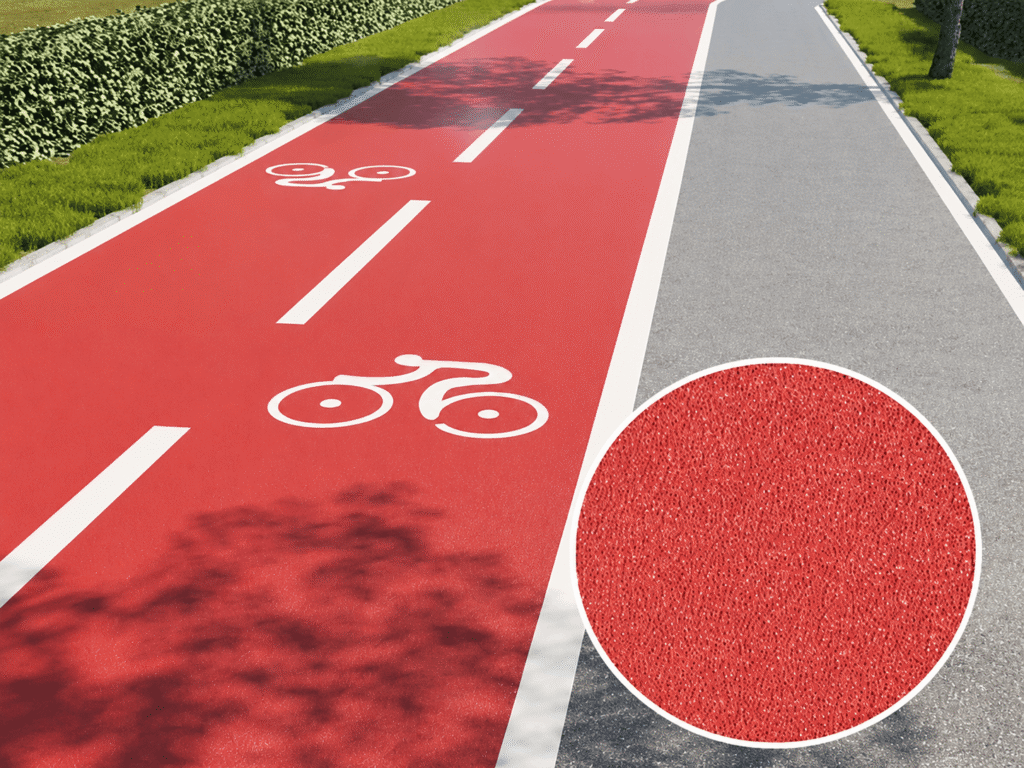
Smaller EPDM granules (such as 0.5–1.5 mm and 1–3 mm sizes) generally create a smoother and more uniform surface because more particles are distributed within the same area. This can help achieve a finer texture, a more consistent appearance, and a cleaner visual effect, making them suitable for projects where surface refinement and design details are important.
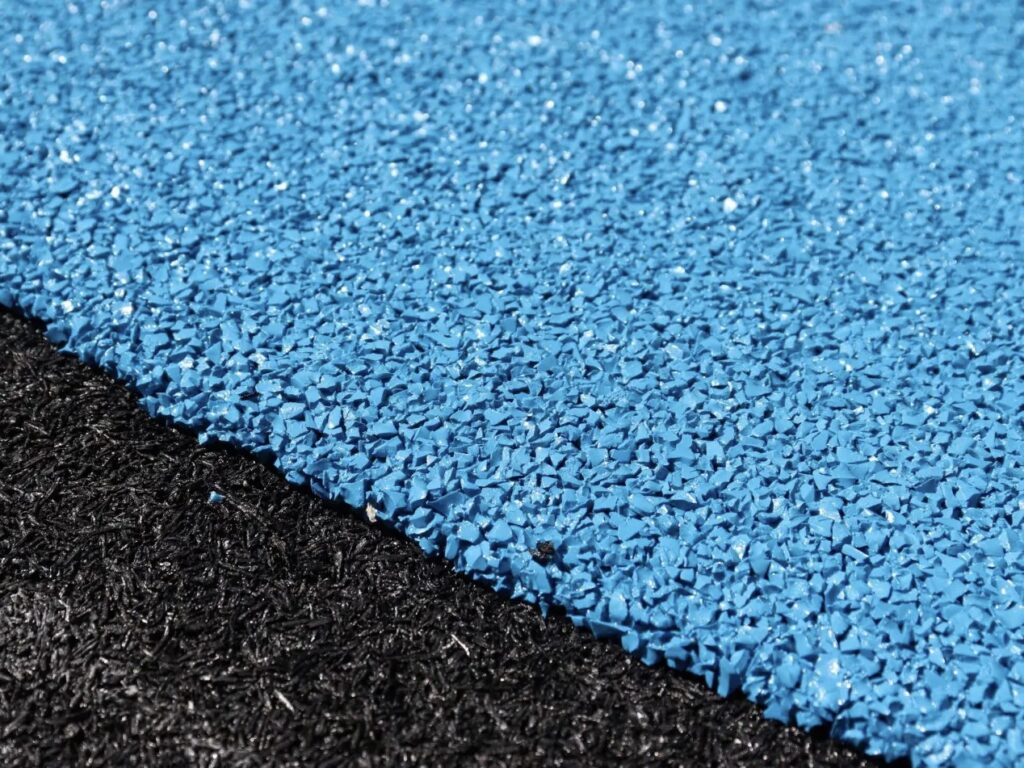
Larger EPDM granules (such as 2–4 mm and 3–5 mm sizes) create a more visible rubber particle texture, giving the surface a stronger granular appearance and a more distinctive finish. The larger particle structure can create a more natural rubber texture and a different surface feel compared with finer granules.
Therefore, selecting the right EPDM granule size depends on the desired surface effect. Smaller granules help create a smoother and more refined appearance, while larger granules deliver a more visible textured finish.
How EPDM Granule Size Influences Color Appearance and Design
EPDM granules are widely used in rubber flooring systems because they are available in a wide range of colors, allowing designers to create customized patterns, logos, and decorative surfaces. The selected granule size can influence how colors appear on the finished flooring surface.
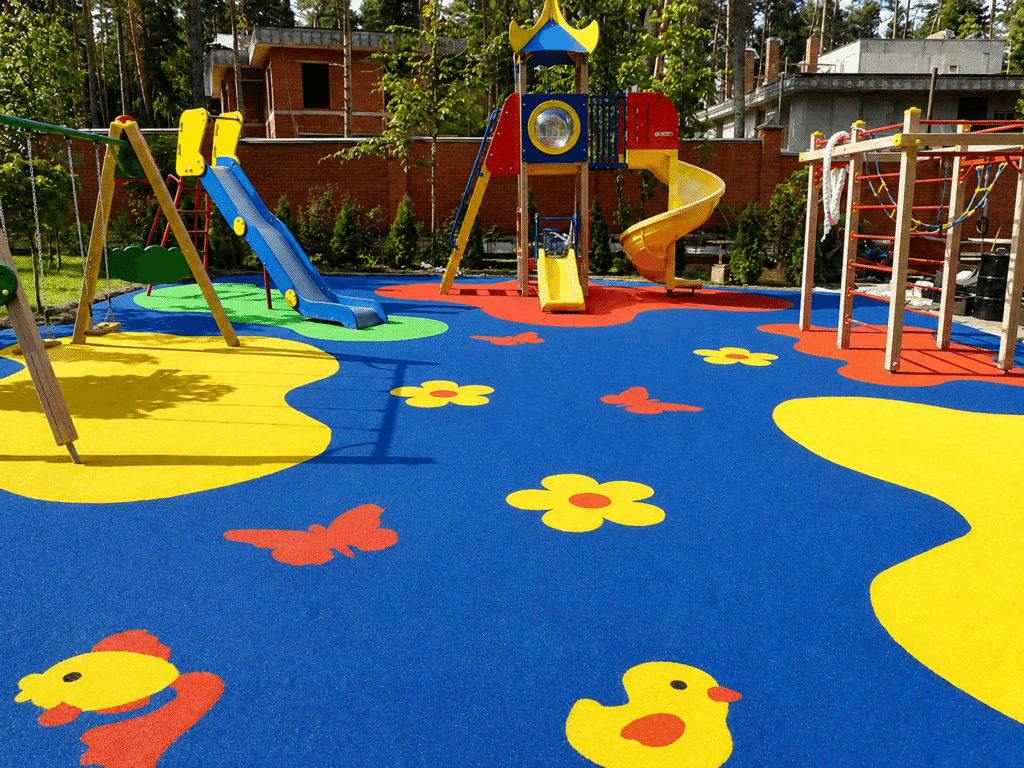
Smaller EPDM granules (such as 0.5–1.5 mm and 1–3 mm sizes) generally provide a more uniform color distribution because more particles are placed within the same surface area. This can help create smoother color transitions and more detailed patterns, making them suitable for projects where visual consistency and design details are important.

Larger EPDM granules (such as 2–4 mm and 3–5 mm sizes) create a stronger particle effect, with individual rubber particles becoming more visible on the surface. This can add more texture and visual depth to the flooring, creating a more natural granular appearance.
Therefore, selecting the right EPDM granule size for decorative flooring applications requires considering the desired design effect together with color requirements, surface texture, and the overall project style.
How EPDM Granule Size Affects Installation and Binder Requirements
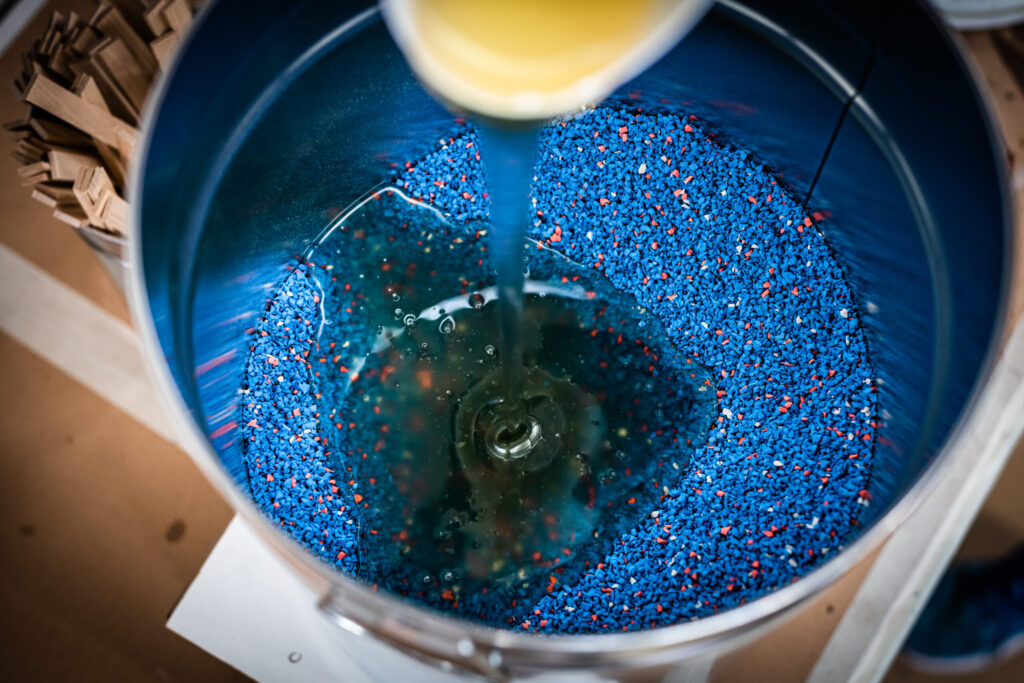
EPDM granule size can also influence the installation process, especially in rubber flooring systems where EPDM granules are mixed with polyurethane (PU) binder.
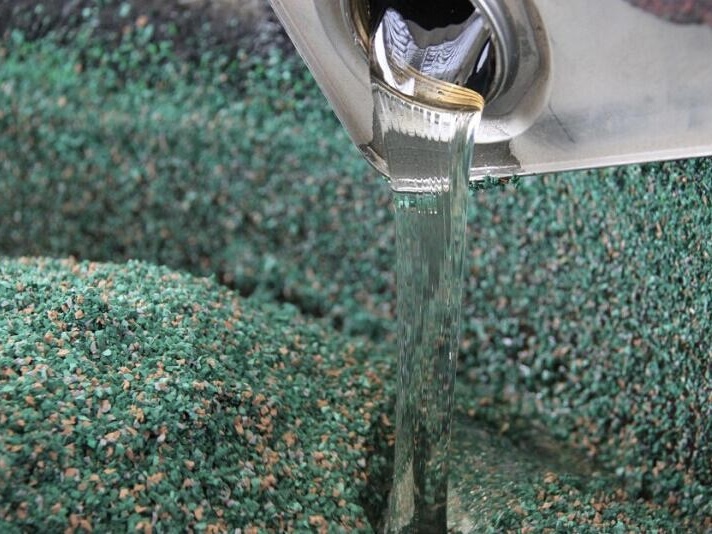
Smaller EPDM granules (such as 0.5–1.5 mm and 1–3 mm sizes) have a larger total surface area because more particles are distributed within the same volume. This may influence the amount of binder required to achieve proper coating and bonding between particles.
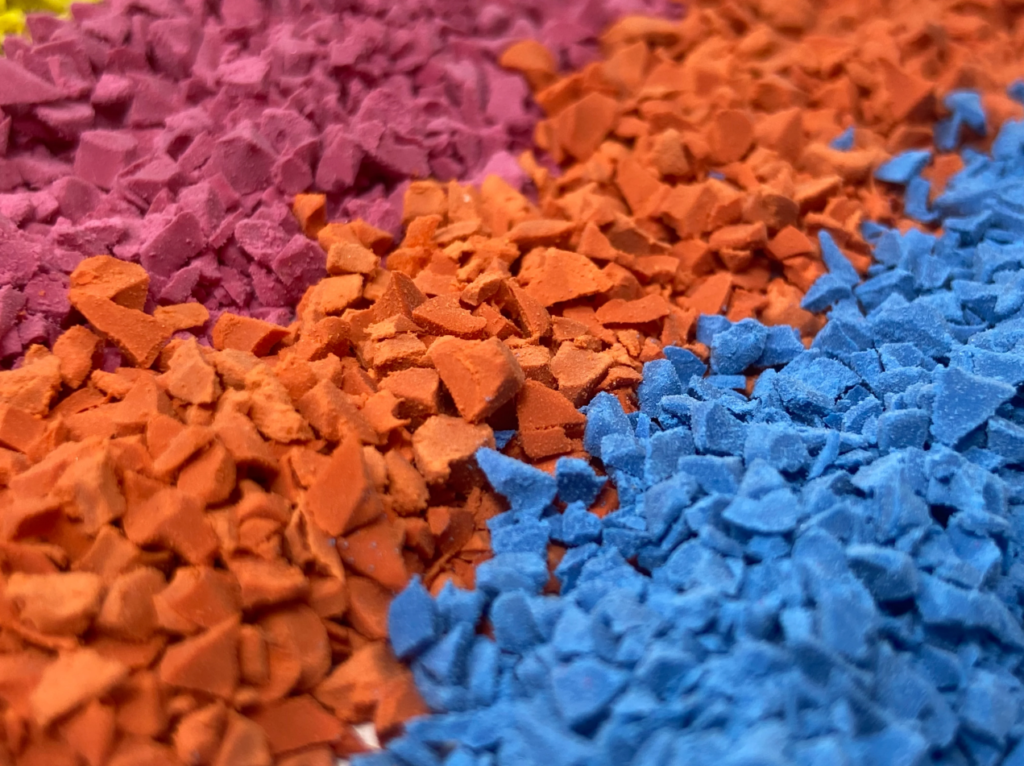
Larger EPDM granules (such as 2–4 mm and 3–5 mm sizes) create a more open particle structure, which can contribute to a stronger textured surface appearance. The final surface characteristics also depend on factors such as installation thickness, binder type, and mixing method.
EPDM Granule Size Selection for Different Flooring Layers
In multi-layer rubber flooring systems, EPDM granule size may also vary depending on the function of each layer.
For the top surface layer, manufacturers and installers typically choose smaller to medium EPDM granules (such as 1–3 mm sizes) when they need a smoother surface appearance, consistent color distribution, and a refined finish.
For base or shock-absorbing layers, they use larger granules (such as 2–5 mm or larger sizes) to create a thicker structure and improve cushioning performance.
Therefore, installers should select EPDM granule size as part of the overall flooring system design. They need to evaluate factors such as installation method, required thickness, PU binder compatibility, and project requirements to achieve the desired surface performance.
To learn more about EPDM flooring systems, including installation processes, system structures, applications, and cost considerations, please refer to our detailed guides:
- EPDM Playground Flooring Installation Guide: Process, System Structure and Cost Factors
- EPDM Rubber Flooring Types, Applications and System Guide
How to Choose EPDM Granule Size for Different Applications?
There is no single EPDM granule size that is suitable for every project. The right choice depends on the application requirements, desired surface appearance, installation system, and expected performance. Different applications may require different balances between surface smoothness, texture, durability, and visual design.
EPDM Granule Size for Playground Flooring
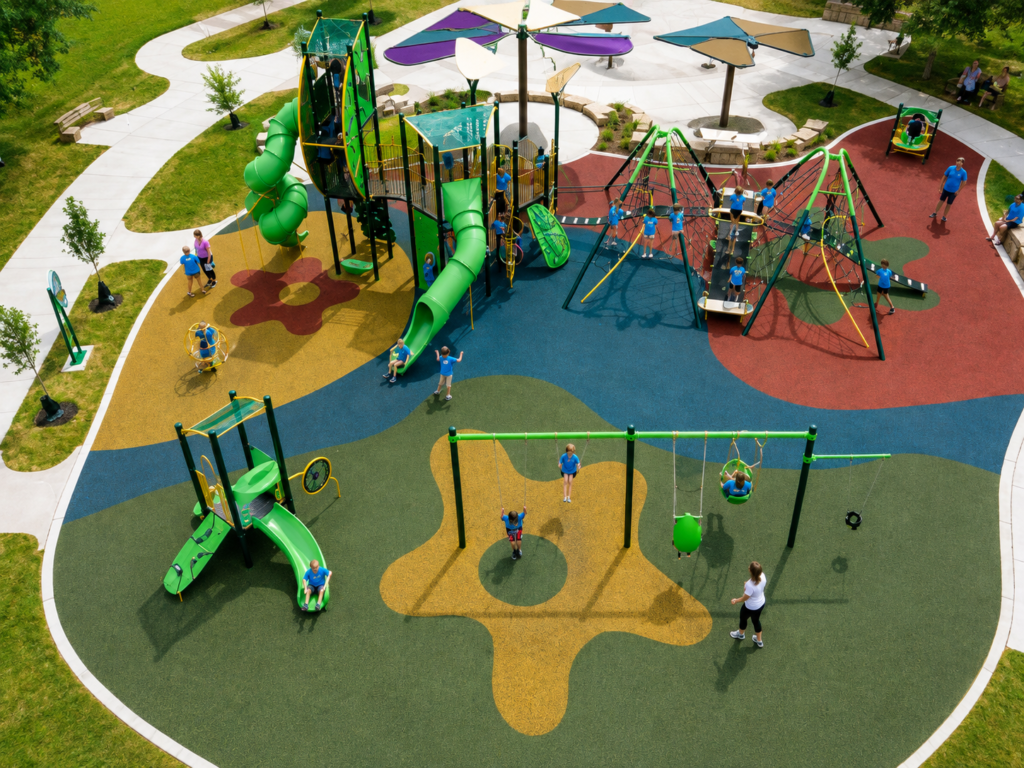
Playground flooring requires a balance of safety, comfort, and visual appeal. The surface should provide a comfortable feel underfoot while supporting colorful designs and creative patterns.
Smaller to medium EPDM granules (such as 0.5–1.5 mm and 1–3 mm sizes) are often considered for playground surfaces where a smoother appearance, uniform colors, and detailed designs are important.
For playground projects, selection should also consider factors such as required impact protection, installation thickness, and the overall flooring system design.
EPDM Granule Size for Running Tracks
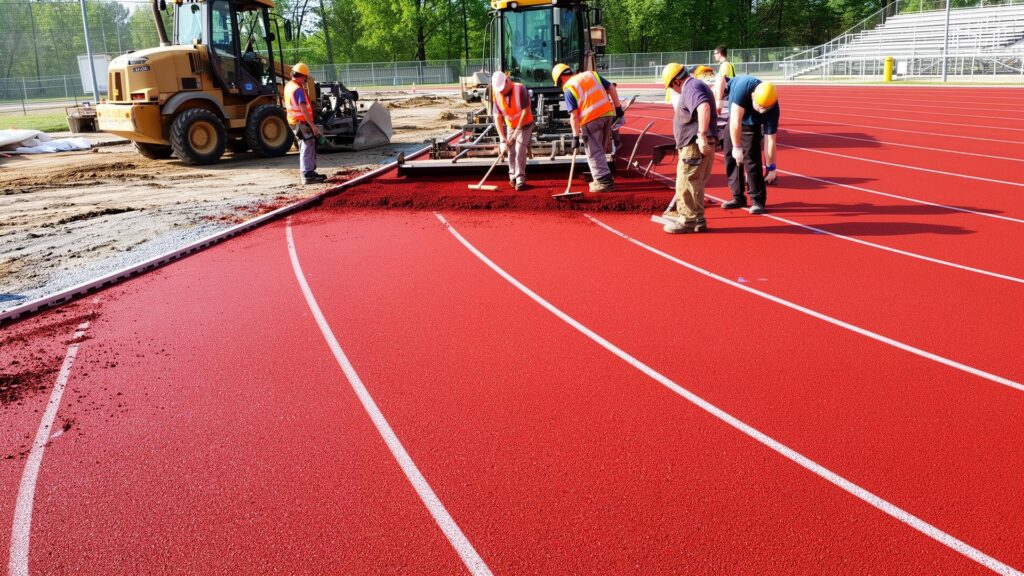
Running tracks require consistent surface performance, durability, and suitable traction. The selected EPDM granule size should be considered together with the complete track system, including base layers, thickness requirements, and performance expectations.
Medium to larger EPDM granules (such as 1–3 mm, 2–4 mm, or 3–5 mm sizes) may be selected depending on the track design and required surface characteristics. The final choice should be based on the specific sports surface system rather than particle size alone.

EPDM Granule Size for Landscape and Recreational Areas
For landscape projects, parks, walkways, and recreational spaces, visual appearance, design flexibility, and overall surface aesthetics are often important considerations.
Different EPDM granule sizes can be selected based on the desired surface appearance and design requirements. Smaller EPDM granules (such as 0.5–1.5 mm and 1–3 mm sizes) can help achieve smoother color transitions and more detailed patterns, making them suitable for projects that require customized designs and refined visual effects.
Larger EPDM granules (such as 2–4 mm and 3–5 mm sizes) create a more visible particle texture and stronger surface definition, which may be preferred when a more natural granular appearance and distinctive finish are desired.
The final granule size selection should consider the overall design concept, expected foot traffic, installation method, and requirements of the complete flooring system.

Conclusion
Choosing the right EPDM granule size is essential for achieving the desired appearance, texture, and performance of rubber flooring systems. Different particle sizes, including 0.5–1.5 mm, 1–3 mm, 2–4 mm, and 3–5 mm, provide different surface characteristics for various applications. By considering project requirements and installation conditions, the most suitable EPDM granule size can be selected.
Rubflo provides standard and customized EPDM rubber granule sizes for different flooring applications. Contact Rubflo for support with granule selection, colors, and customized requirements.